
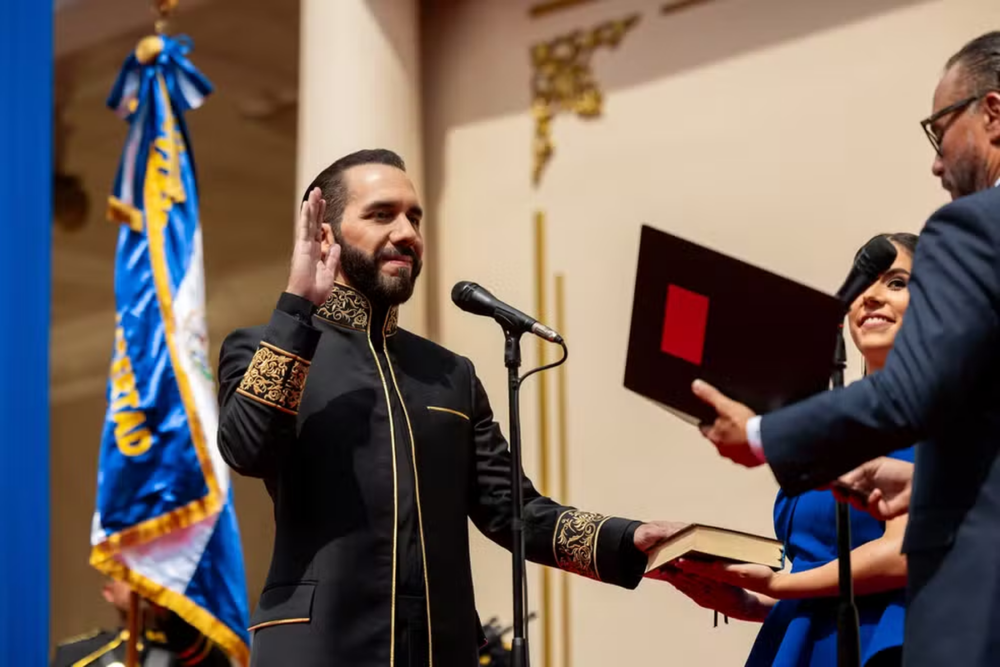
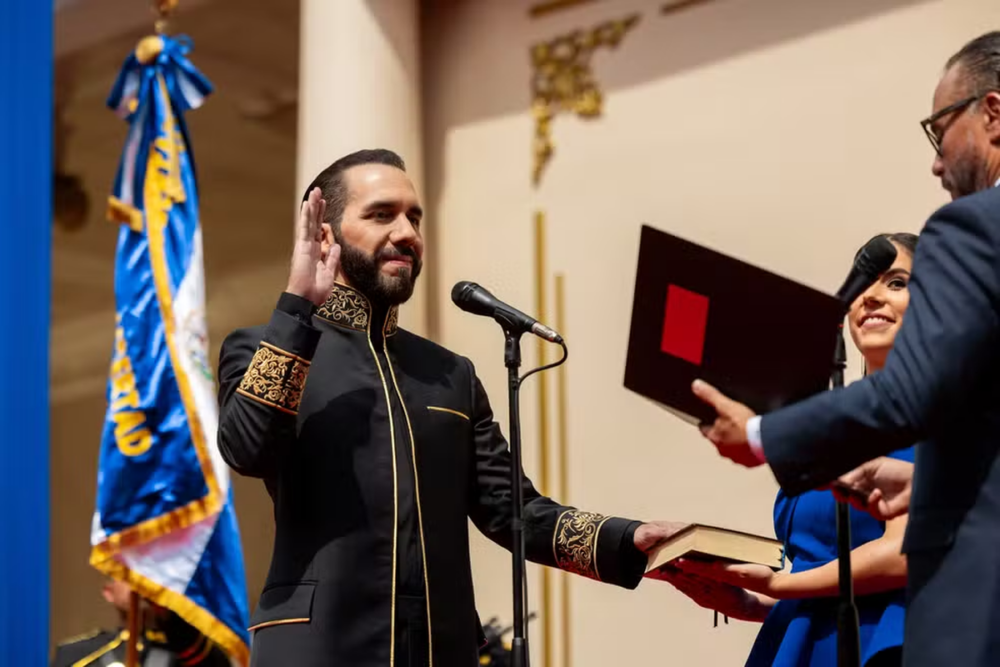
Summary
- Nayib Bukele submitted a request for a third term as president on Sunday (28).
- The unlimited re-election has been made possible in El Salvador due to a constitutional reform.
- The president disclosed in December to a Spanish YouTuber the desire to stay in power until 2033.
- Seventy percent of Salvadorans support the idea of him serving a third term, but six out of ten are afraid to speak out against him.
- New concepts from the first party will be presented the following day at noon, ahead of the general elections in February 2027.
El Salvador’s president Nayib Bukele solidified the path to potential unlimited re-election in the country last August through a constitutional reform that permitted changes, advanced elections, and extended the presidential term from five to six years.
Party confirms submission for 2027
The president of the New Ideas party confirmed on Sunday (28) the intention to seek a third consecutive term and extend their rule until 2033.
Xavi Zablah Bukele announced the current president’s candidacy for the February 2027 election, declaring, “We are prepared!”
High support and lack of internal resistance
Bukele, who has been in power since 2019, is uncontested in the party’s upcoming primary election on the 12th. Furthermore, he enjoys an approval rating of approximately 80%, solidifying his political standing in the nation.
His administration has also had an impact on other regional leaders, particularly through his approach to tackling organized crime, which is characterized by stringent security measures that have sparked extensive discussions.
Other leaders are inspired by the security model.
The large prisons established in El Salvador served as a model for conservative politicians in Latin America, such as Daniel Noboa in Ecuador, Abelardo de la Espriella in Colombia, and Keiko Fujimori in Peru.
International criticism and the concentration of power
At 44 years old, Bukele refers to himself as a “legal dictator” and supports the actions taken in the nation, including declaring a state of emergency, suspending constitutional rights, and increasing oversight of government institutions.
International organizations report that in reality, the government functions with a high level of centralization of power, increased involvement of the military and police, and limitations on civil rights.
Mass Incarceration and Enhanced Security
El Salvador has one of the highest imprisonment rates globally due to this policy, affecting about 2% of the adult population. However, the government asserts that these actions have led to a reduction of over 90% in homicides.
Support from the public and concern about being criticized
Bukele continues to enjoy strong backing from within the country, with around 70% of the population reportedly in favor of a third term. However, some individuals are hesitant to openly express opposition to the government due to fear.
Critique of human rights opposition
The president has also addressed accusations of human rights abuses by global organizations. He has publicly emphasized that he values the safety of law-abiding citizens over that of criminals.
New app formalizes plan to stay in control
The new app solidifies a prolonged political agenda centered on retaining control of the executive branch and continuing security measures implemented since 2019.
- Global
- Latin America
- democratic government
- Presidential voting
- Policy statement

